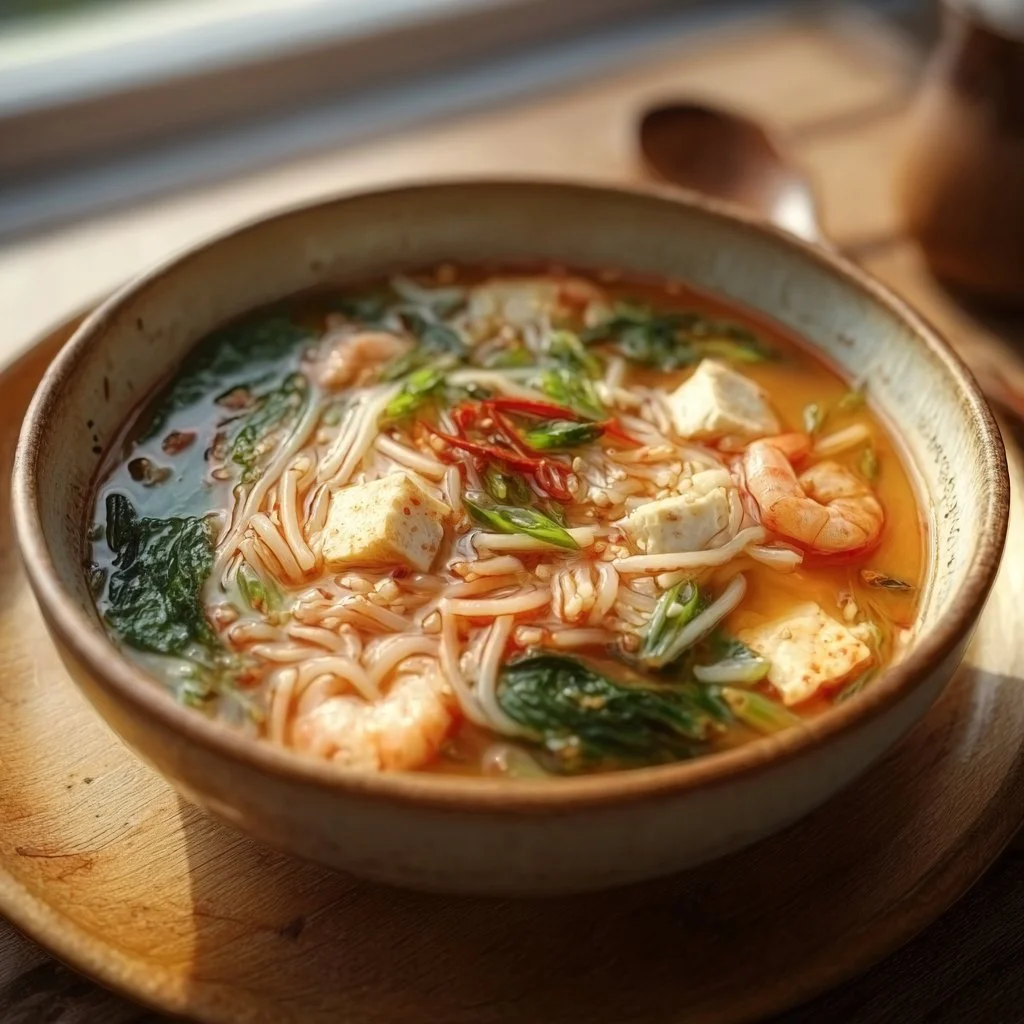
Jjamppong
A Spicy Seafood Adventure Awaits!
Ever had a savory bowl of noodles that dances with the flavors of the ocean? Jjamppong might just become your new obsession! This quick and easy recipe packs a punch with mixed seafood, vibrant veggies, and a broth that’ll warm your soul. One taste, and you’ll see why it’s a hit in many Korean households. Get ready to dive into a delicious bowl of comfort!
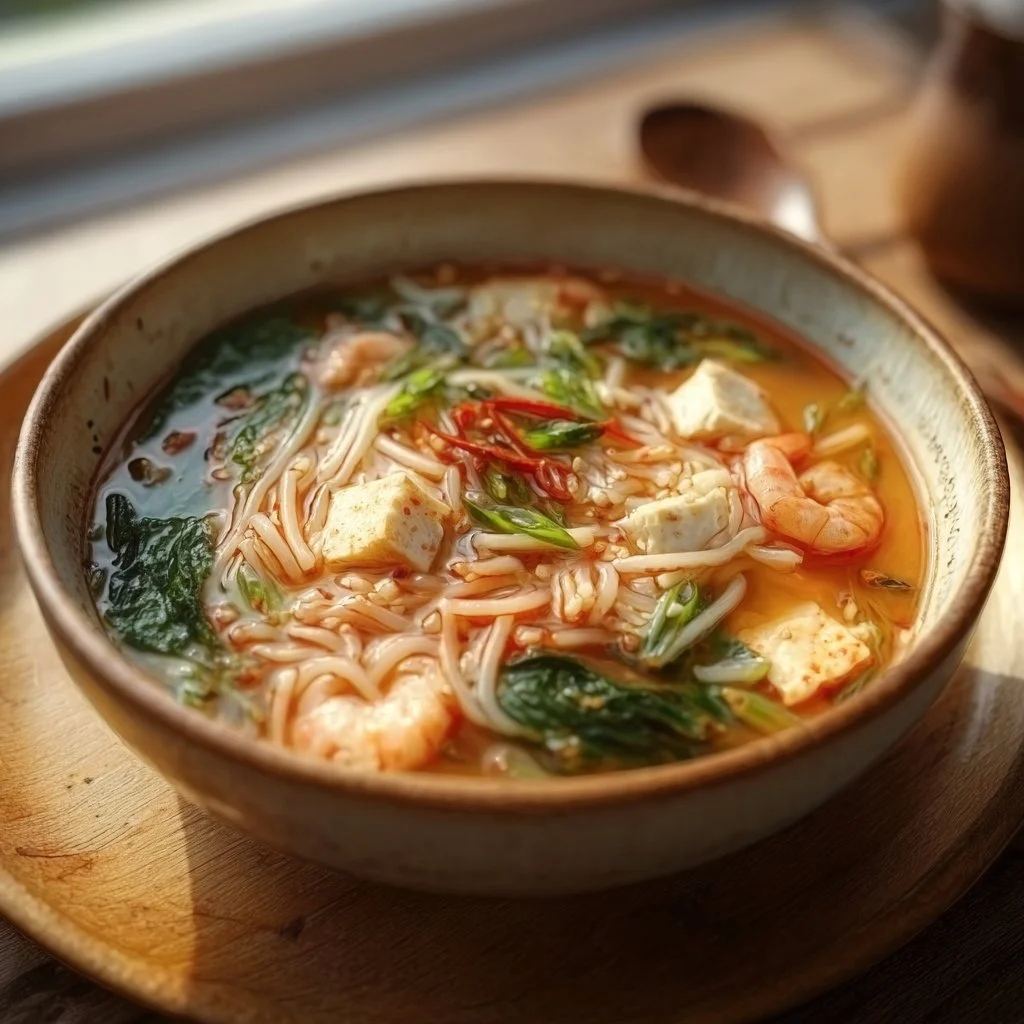
Why Make This Recipe
Wondering why you should whip up a pot of Jjamppong? Here are a few great reasons:
- One-Pan Wonder: Minimal cleanup means more time to enjoy your food, and less time scrubbing pots. Who doesn’t love that?
- Family-Friendly: Even picky eaters can’t resist the colorful ingredients and the rich, hearty broth. Get ready for empty bowls!
- Affordable and Nutritious: Filled with seafood and veggies, this dish is both easy on the wallet and a great way to sneak in some healthy ingredients.
Ingredients
You don’t need fancy stuff — just these basics!
- 200g Korean wheat noodles
- 300g mixed seafood (shrimp, squid, mussels)
- 1 medium onion, sliced
- 1 bell pepper, sliced
- 1 carrot, sliced
- 2 cloves garlic, minced
- 1 tablespoon ginger, minced
- 4 cups fish stock or water
- 2 tablespoons gochugaru (Korean chili flakes)
- 2 tablespoons soy sauce
- 1 tablespoon sesame oil
- Salt and pepper to taste
- Green onions for garnish
Directions
- Cook the Korean wheat noodles according to package instructions, then drain and set aside.
- In a large pot, heat the sesame oil over medium heat and sauté the garlic, ginger, onion, bell pepper, and carrot until softened.
- Add the mixed seafood and cook until they are just about done, about 3-5 minutes.
- Pour in the fish stock or water, and add gochugaru, soy sauce, and season with salt and pepper. Bring to a boil.
- Reduce heat and let it simmer for 10 minutes for the flavors to meld.
- Add the cooked noodles to the soup and stir gently.
- Serve hot, garnished with green onions.
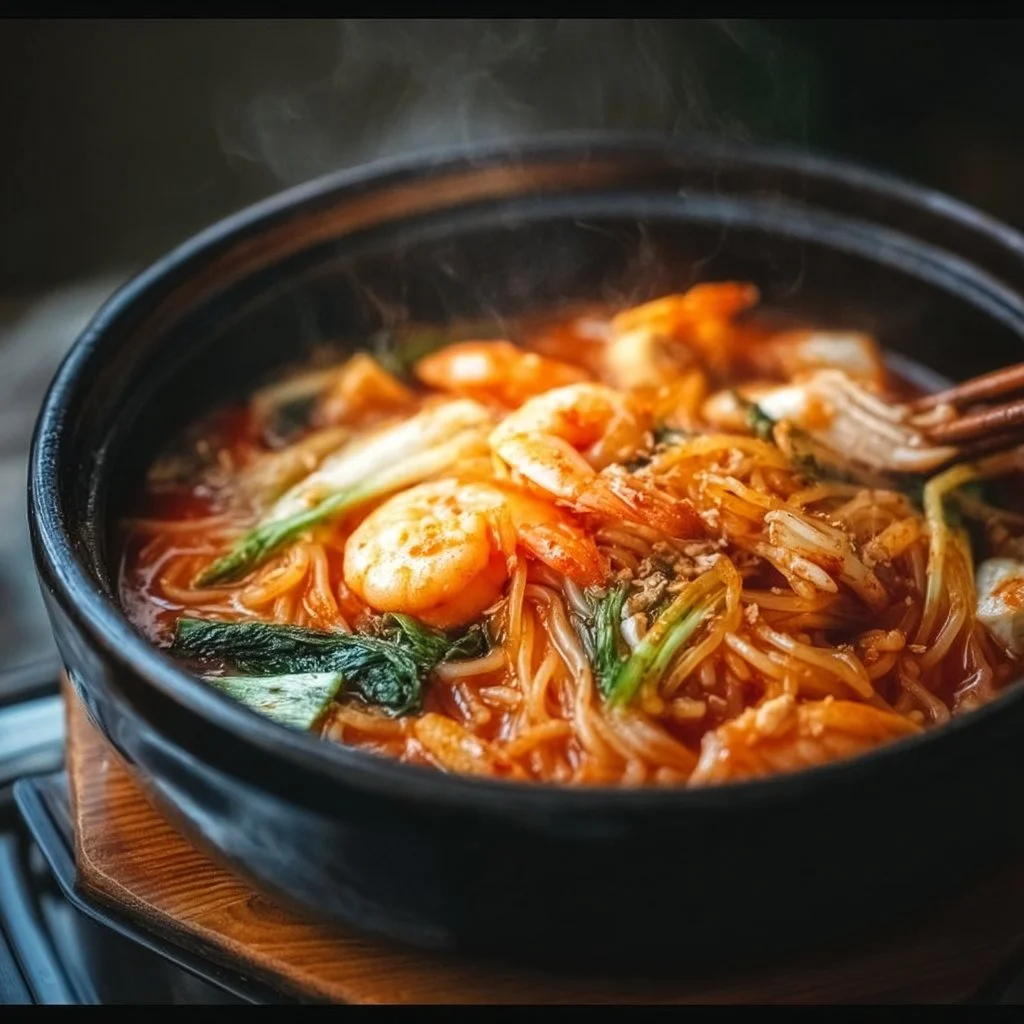
How to Make Jjamppong (Overview)
Making Jjamppong is a breeze! Start by cooking your noodles while you heat oil and toss in your veggies. Don’t hold back on the garlic and ginger; they add layers of flavor. Once your seafood joins the party (it takes just a few minutes!), add your stock, seasonings, and let it all simmer. Finally, mix in those noodles and voila – a masterpiece in a bowl!
Pro Tip: Don’t skip toasting the garlic — it makes all the difference!
How to Serve Jjamppong
Serving Jjamppong is just as fun as making it! Pour that vibrant, spicy soup into a bowl and let the colors pop. The bright reds from the gochugaru and the varied hues of the seafood and veggies create such a feast for the eyes. Pair it with some crispy tempura or a refreshing cucumber salad for a delightful crunch. The aroma alone will have your guests lining up for seconds!
How to Store Jjamppong
Leftover Jjamppong? Yes, please! It keeps well in the fridge for about 3 days. Just make sure it’s in an airtight container. For longer storage, you can freeze it for up to a month. Just reheat gently on the stovetop, adding a splash of water or stock if it seems thick. Trust me; it’ll still be delicious!
Tips to Make Jjamppong
- Timing: Don’t overcook your seafood. It should just be done when you add the broth.
- Ingredient Swaps: If you lack seafood, feel free to toss in some chicken or tofu for a different vibe.
- Texture: For extra crunch, add some bean sprouts right before serving.
Variation
Ready to mix it up? Try making this dish vegan by swapping out seafood for more veggies like mushrooms and zucchini. You can also play with your spice level by adjusting the gochugaru – go bold or keep it mild, depending on your crowd’s preferences!
FAQs
Can I use different noodles?
Absolutely! You can switch Korean wheat noodles for any noodles you love. Just keep an eye on the cooking times.
How can I make this ahead of time?
Make the broth and veggies in advance, then just add the noodles when you’re ready to serve.
Can I freeze Jjamppong?
Definitely! It freezes well, but remember to store it without the noodles to maintain the best texture when reheating.
📌 Pin this recipe for your next cozy dinner night!
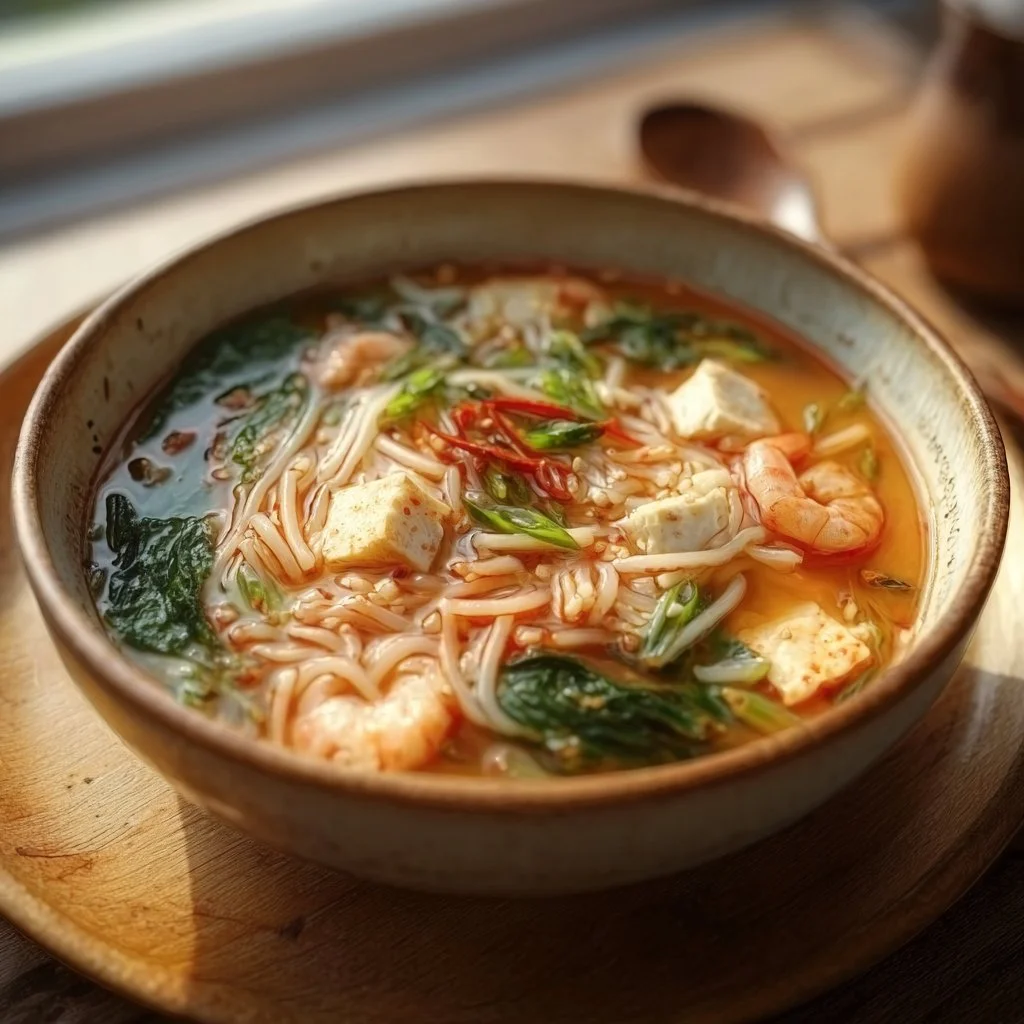
Jjamppong
Ingredients
Method
- Cook the Korean wheat noodles according to package instructions, then drain and set aside.
- In a large pot, heat the sesame oil over medium heat and sauté the garlic, ginger, onion, bell pepper, and carrot until softened.
- Add the mixed seafood and cook until they are just about done, about 3-5 minutes.
- Pour in the fish stock or water, add gochugaru, soy sauce, and season with salt and pepper. Bring to a boil.
- Reduce heat and let it simmer for 10 minutes for the flavors to meld.
- Add the cooked noodles to the soup and stir gently.
- Serve hot, garnished with green onions.